
Industries
Logistics & Fleet
Connected fleet intelligence for operators that need real-time visibility, faster dispatch, smarter maintenance, and automated billing workflows.
Let’s talk
The operating context
Bridges helps logistics and fleet organizations connect vehicles, drivers, dispatch, maintenance, billing, and customer workflows into intelligent operating systems.
Which vehicle can take the next job?
Vehicle location, availability and an existing assignment answer different questions. In an illustrative dispatch workflow, the dispatcher needs all three before committing capacity. The approved assignment register should own the job allocation; a location feed supplies dated observations. If a vehicle appears nearby but its location is stale, or two jobs compete for it, the dispatcher resolves the conflict before a customer receives a commitment.
A dispatch decision with its evidence
Limit the initial review to one dispatch desk and a defined job category so that allocation rules and exceptions can be checked against actual work.
- An assignment record with the vehicle, driver, job window, evidence time and approving dispatcher.
- A queue separating capacity conflicts, stale feeds and maintenance holds.
- A dispatch baseline measured from a complete job request to an approved assignment, alongside conflicts per allocated job.
The challenges we help address
- Dispatch teams manage vehicles and drivers through fragmented tools.
- Maintenance issues are discovered late, after downtime has already affected operations.
- Billing, delivery status, and operational reporting require manual reconciliation.
Where intelligence can help
- Fleet intelligence
- Route optimization
- Dispatch automation
- Predictive maintenance
- Driver workflows
- Billing and reporting automation
Connecting your environment
Fleet platforms, GPS data, Driver apps, Maintenance logs, Billing systems, Customer portals, ERP data.
What to measure
Agree a baseline and target for the engagement. These are evaluation areas, not reported client results.
- Higher fleet utilization
- Faster dispatch decisions
- Reduced downtime
- Less manual data entry
- More accurate invoicing
Useful questions
What problems does AI solve in logistics and fleet operations?
AI helps logistics teams optimize routes, predict maintenance issues, automate dispatch decisions, reduce manual data entry, and give managers real-time visibility across vehicles, drivers, and jobs.
What systems can Bridges connect for logistics teams?
Bridges can connect GPS feeds, fleet platforms, driver apps, maintenance records, billing systems, customer portals, ERP tools, and operational dashboards.
What workflows can be automated?
Common workflows include dispatch, route planning, delivery status updates, maintenance scheduling, driver task management, invoicing, and performance reporting.
What outcomes should leadership expect?
Agree targets for higher fleet utilization, faster dispatch decisions, reduced downtime, less manual data entry, more accurate invoicing. Establish current performance first and track changes during the engagement. These are potential improvement areas, not guaranteed or previously measured client results.
How does Bridges move from strategy to production?
Bridges identifies high-volume operational workflows, connects the required systems, deploys automation in phases, and measures impact against cost, time, and service KPIs.
Explore the applications
Engineering
Applications Development & Bespoke Services
Design and engineer applications around the way your business needs to work.
ExploreEngineering
Data Engineering, Analytics & Monetization
Connect your data foundations to the decisions your business needs to make.
Explore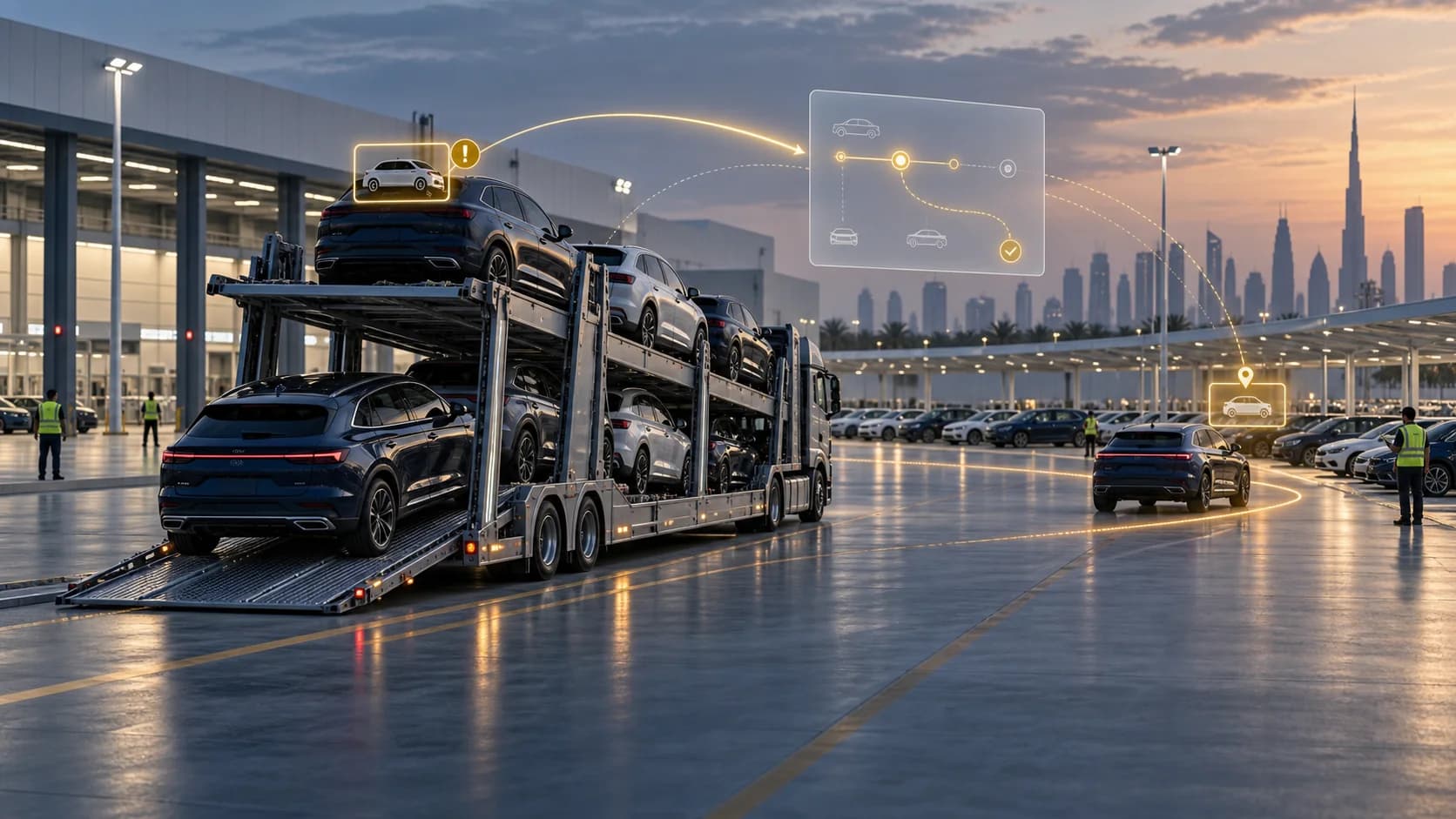
Artificial intelligence
AI in Logistics: From Predicting Delays to Resolving Exceptions
A practical approach to using AI for logistics exceptions, with vehicle-transfer examples, dependable event data and accountable operational handoffs.
Explore