
Capabilities
Intelligent Automation & Agentic AI
Bring intelligence into everyday operations with AI agents, connected workflows and carefully governed automation.
Let’s talkWhen the work crosses systems and teams
Repeated document checks, disconnected queues and manual reconciliation can consume attention needed for exceptions. We assess where rules-based automation is sufficient and where an AI-assisted workflow can handle ambiguity.
Useful intelligence. Explicit authority.
AI interprets the document; rules, permissions and human review control changes to a business record.
- Source recordForm or document
- Extract or retrieveFields and approved context
- ValidateRequired fields, duplicates and rules
Checks pass
Exception or approval needed
How we approach the work
Start with one workflow and define the decisions a system may make. Design tool access, retrieval, approval points and fallback paths, then evaluate representative cases before releasing the workflow in phases.
What you leave with
The final scope is agreed around your priorities. Typical outputs include:
- Workflow and exception map with named human owners
- Agent or automation architecture and integration specification
- Evaluation set, access boundaries and operational monitoring plan
What we need to get started
Reliable source records, supported system interfaces and staff who can evaluate outputs are prerequisites. AI autonomy is bounded by the risk of the action.
Practical applications
Illustrative engagement scenarios. The scope, responsibilities and measures are agreed for each organization.
What we cover
- Agentic AI Architecture & Deployment
- Robotic Process Automation (RPA)
- LLM Integration & RAG Systems
- AI-Powered Workflow Orchestration
A deliberate path forward
- Process Assessment
- AI Use Case Identification
- Architecture Design
- Development & Training
- Production Deployment & Monitoring
Useful questions
What is the difference between traditional automation and agentic AI?
Rules-based automation executes predefined steps. Agentic AI can select tools and plan steps toward a goal, but its permissions and actions still require explicit boundaries, evaluation and human oversight.
How do you identify the best processes for AI automation?
We examine workload, variability, data quality, exception rates and the consequences of a wrong action. A useful first workflow has a clear owner, accessible inputs and a measurable baseline.
What ROI can we expect from intelligent automation?
Return depends on the workflow. Compare saved staff effort and reduced rework with integration, model usage, review and support costs. We establish a baseline before a pilot and report observed results separately from forecasts.
Can agentic AI integrate with our existing enterprise systems?
Integration may use supported APIs, middleware or controlled workflow interfaces. Feasibility depends on access, permissions, system limitations and the reliability of the underlying records.
How do you ensure AI automation is reliable in production?
Design includes representative evaluations, restricted tool access, logging, human approval for consequential actions and a fallback process. Monitoring should cover quality and exceptions as well as system availability.
From capability to application
Explore relevant use cases
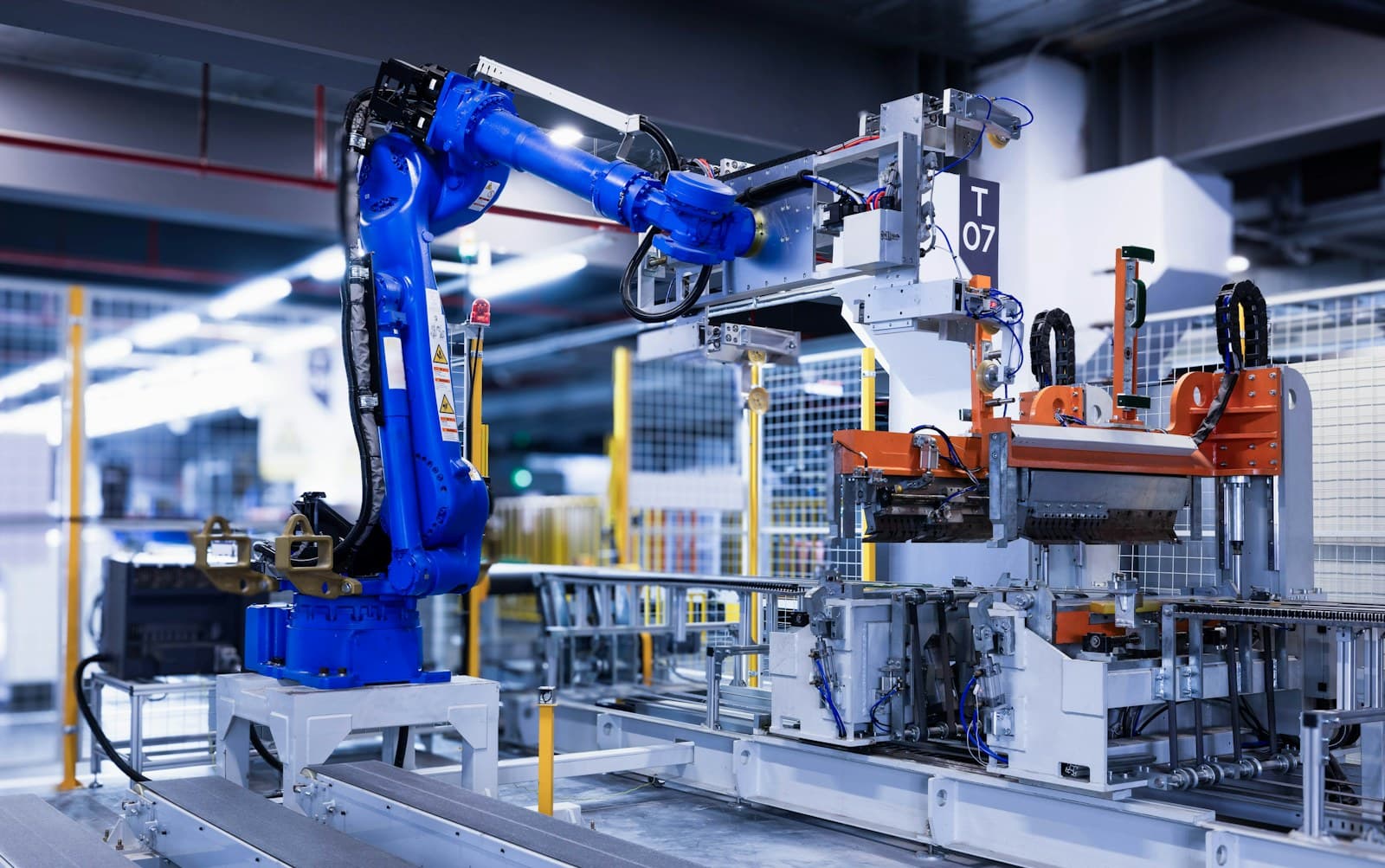
Industrial & Manufacturing
Compliance intelligence
Quality and operations teams assemble production, inspection and maintenance evidence across disconnected records.
Explore
Logistics & Fleet
Fleet intelligence
Dispatchers need to allocate jobs while vehicle availability and assignment changes are spread across several tools.
Explore